
Introduction:
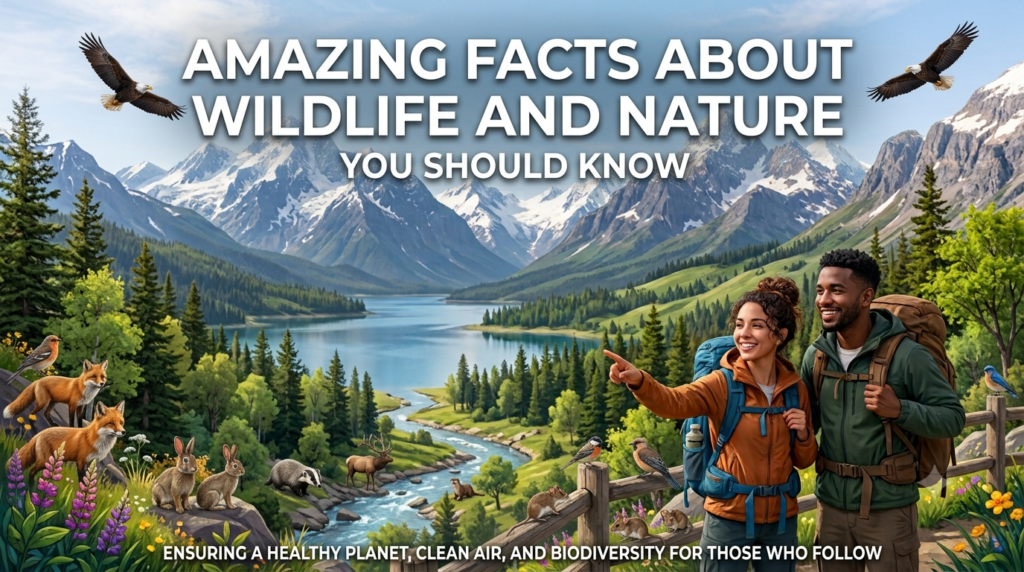
The natural world is full of incredible wonders that continue to amaze scientists, travelers, and wildlife enthusiasts every day. From the smallest insects to the largest mammals, every living creature has unique characteristics that help it survive and thrive in its environment. Nature is a masterpiece shaped by millions of years of evolution, creating breathtaking landscapes, diverse ecosystems, and extraordinary wildlife. Every forest, mountain, river, desert, and ocean hides fascinating secrets waiting to be discovered. Learning about these amazing facts not only increases our appreciation for nature but also reminds us why protecting wildlife and natural habitats is essential for the future of our planet.
One of the most fascinating facts about wildlife is that Earth is home to more than eight million different species of plants and animals, yet scientists believe millions of species have still not been discovered. Every year, researchers identify hundreds of new insects, fish, plants, fungi, and even mammals living in remote forests, deep oceans, and isolated mountain regions. This shows that despite modern technology, nature continues to surprise us with incredible discoveries that expand our understanding of life on Earth.
Forests are often called the lungs of the planet because they absorb carbon dioxide and release oxygen through the process of photosynthesis. Tropical rainforests alone produce a significant portion of the Earth’s oxygen while storing enormous amounts of carbon that helps reduce climate change. They are also home to more than half of the world’s terrestrial plant and animal species, despite covering only a small percentage of the Earth’s surface. These dense forests support countless ecosystems where every organism depends on another for survival.
The Amazon Rainforest is one of the most biodiverse places on Earth. Scientists estimate that a single hectare of Amazon rainforest can contain hundreds of different tree species, thousands of insects, and countless birds, reptiles, mammals, and amphibians. Some areas remain so remote that researchers continue discovering species never before seen by humans. This extraordinary biodiversity makes the Amazon one of the world’s most valuable natural treasures.
Elephants are among the most intelligent animals on Earth. They have excellent memories, strong family bonds, and complex social behaviors. Elephants can recognize themselves in mirrors, communicate through low-frequency sounds that travel for several kilometers, and even display behaviors that resemble empathy and grief. Herd members often protect injured companions and appear to mourn deceased family members, demonstrating emotional intelligence rarely seen in the animal kingdom.
Dolphins are another example of remarkable intelligence in wildlife. These marine mammals communicate using unique whistles and clicks, allowing them to recognize individual members of their group much like humans recognize names. Dolphins cooperate while hunting, teach survival skills to their young, and even help injured members of their pod. Their advanced communication abilities continue to be studied by marine biologists around the world.
Bird migration is one of nature’s most incredible phenomena. Every year, billions of birds travel thousands of miles between breeding and wintering grounds. Some species navigate using the position of the sun, stars, Earth’s magnetic field, and even landmarks they remember from previous journeys. The Arctic Tern holds one of the longest migration records, traveling from the Arctic to Antarctica and back each year—a round trip of tens of thousands of kilometers.
Nature has also produced some extraordinary survival adaptations. Camouflage allows animals such as chameleons, stick insects, snow leopards, and octopuses to blend almost perfectly into their surroundings. This ability helps predators approach prey unnoticed while allowing vulnerable animals to hide from danger. The octopus is especially remarkable because it can change not only its color but also its skin texture within seconds, making it one of the greatest masters of disguise in the natural world.
The oceans contain some of the most mysterious environments on Earth. More than seventy percent of the planet is covered by water, yet scientists have explored only a small fraction of the deep ocean. Thousands of marine species remain undiscovered, living in complete darkness under extreme pressure. Deep-sea creatures often possess glowing bodies through a process called bioluminescence, allowing them to communicate, attract prey, or avoid predators in the darkness of the ocean depths.
Whales are the largest animals ever known to have lived on Earth. The blue whale can grow over one hundred feet long and weigh more than 180 tons. Surprisingly, despite their enormous size, blue whales feed primarily on tiny shrimp-like creatures called krill. During feeding season, a single blue whale can consume several tons of krill every day, demonstrating the incredible balance that exists within marine ecosystems.
Honeybees are small insects with an enormous impact on life. These hardworking pollinators are responsible for helping produce many fruits, vegetables, nuts, and flowering plants. Without bees, global food production would decline significantly, affecting both wildlife and human populations. Bees communicate the location of food sources through a fascinating movement known as the “waggle dance,” allowing other bees to find flowers efficiently.
Trees are among the oldest living organisms on Earth. Some ancient trees have survived for thousands of years, witnessing countless generations of wildlife and human history. Forests are not simply collections of individual trees—they are interconnected communities. Scientists have discovered that trees communicate through underground fungal networks, sometimes referred to as the “Wood Wide Web.” These networks allow trees to share nutrients, water, and chemical signals that help neighboring trees survive disease and environmental stress.
Deserts may appear lifeless, but they support highly specialized wildlife adapted to harsh conditions. Animals such as camels, fennec foxes, kangaroo rats, and desert reptiles have evolved remarkable abilities to conserve water and survive extreme temperatures. Many desert plants store water in thick stems or roots, while some animals remain underground during the hottest part of the day to avoid dehydration.
Coral reefs are often called the rainforests of the sea because they support an incredible diversity of marine life. Although coral reefs cover less than one percent of the ocean floor, they provide habitat for approximately one-quarter of all marine species. Fish, sea turtles, sharks, octopuses, and countless invertebrates depend on healthy coral ecosystems for food and shelter. Unfortunately, climate change and pollution threaten reefs around the world, making conservation efforts increasingly important.
Predators play an essential role in maintaining healthy ecosystems. Animals such as wolves, lions, tigers, sharks, and eagles help control prey populations, preventing overgrazing and maintaining ecological balance. When top predators disappear, ecosystems often become unstable, demonstrating how every species contributes to the health of the environment.
Plants possess remarkable survival strategies that many people never notice. Some flowers bloom only at night to attract specific pollinators such as moths and bats. Certain plants can survive years without rain, while carnivorous plants capture insects to obtain nutrients from nutrient-poor soils. These fascinating adaptations highlight the extraordinary diversity of life found throughout the natural world.
Climate influences wildlife in many surprising ways. Seasonal changes trigger migration, hibernation, breeding, flowering, and food availability. Bears hibernate during winter to conserve energy, while many bird species migrate to warmer climates in search of food. Plants respond to changing temperatures by producing flowers, fruits, and seeds at precisely the right time to maximize survival.
Nature also provides countless benefits to human health. Spending time outdoors has been shown to reduce stress, lower blood pressure, improve concentration, and support mental well-being. Forest walks, hiking, birdwatching, and exploring national parks help people reconnect with nature while encouraging healthier lifestyles. Many doctors now recognize the positive effects of spending time in green spaces as part of overall wellness.
Despite its incredible beauty, wildlife faces numerous challenges. Habitat destruction, pollution, illegal hunting, climate change, invasive species, and deforestation continue to threaten ecosystems worldwide. Thousands of species are currently endangered, making conservation efforts more important than ever. Protected areas, wildlife reserves, sustainable tourism, habitat restoration, and environmental education all play vital roles in preserving biodiversity for future generations.
Technology has transformed wildlife research in recent years. Camera traps capture rare animals without disturbing them, drones monitor forests and marine environments, satellite tracking follows migration routes, and artificial intelligence helps scientists analyze enormous amounts of ecological data. These innovations improve conservation strategies while providing valuable insights into animal behavior and ecosystem health.
Every individual can contribute to protecting wildlife and nature through simple actions. Reducing plastic waste, recycling, conserving water, planting native trees, supporting conservation organizations, and choosing environmentally friendly products all help reduce human impact on the environment. Educating others about wildlife conservation also creates greater awareness and encourages responsible environmental behavior.
The more we learn about wildlife and nature, the greater our appreciation becomes for the extraordinary planet we call home. Every ecosystem, from tropical rainforests and coral reefs to deserts and polar regions, contains remarkable species perfectly adapted to their environments. These amazing facts remind us that nature is far more complex, interconnected, and fascinating than we often realize.
In conclusion, the natural world is filled with astonishing discoveries that continue to inspire curiosity and wonder. From intelligent elephants and migrating birds to ancient forests and mysterious deep oceans, wildlife demonstrates the incredible diversity of life on Earth. Protecting these ecosystems ensures that future generations will continue to experience the beauty and scientific value of the natural world. By supporting conservation efforts and respecting nature, we help preserve one of humanity’s greatest treasures—a healthy, thriving planet filled with extraordinary wildlife and breathtaking natural landscapes.