
Introduction:
Wild nature photography is one of the most rewarding hobbies for anyone who loves the outdoors. It allows you to capture breathtaking landscapes, colorful wildlife, peaceful forests, majestic mountains, flowing rivers, and unforgettable sunsets while creating memories that last a lifetime. Unlike studio photography, nature photography offers endless opportunities because every season, location, and weather condition creates something unique. Whether you are using a professional DSLR camera, a mirrorless camera, or even a modern smartphone, learning the basics of nature photography will help you capture stunning images that showcase the beauty of the natural world. With patience, practice, and the right techniques, beginners can quickly improve their skills and develop a deeper appreciation for wildlife and natural landscapes.
One of the first things every beginner should understand is that successful nature photography starts with observation rather than simply taking pictures. Spending time quietly watching your surroundings allows you to notice changing light, animal behavior, weather patterns, and interesting compositions that many people overlook. Nature moves at its own pace, and the best photographs often come to those who are willing to wait for the perfect moment. A bird landing on a branch, sunlight breaking through the trees, or a deer walking into a clearing can transform an ordinary scene into an extraordinary photograph.
Choosing the right equipment is important, but beginners should remember that expensive gear is not always necessary. Many beautiful nature photographs are taken with entry-level cameras or smartphones equipped with high-quality lenses. A camera with manual settings provides greater creative control, while a versatile zoom lens allows you to photograph both landscapes and wildlife. A sturdy tripod helps reduce camera shake when shooting waterfalls, forests, or sunrise scenes in low light. Extra batteries, memory cards, and a weather-resistant camera bag are also useful for long outdoor photography trips.
Understanding natural light is one of the most valuable skills in photography. Lighting has a dramatic effect on the mood, color, and overall quality of an image. The best times for nature photography are usually during the “Golden Hour,” which occurs shortly after sunrise and before sunset. During these periods, sunlight is soft, warm, and evenly distributed, creating beautiful colors and gentle shadows. Harsh midday sunlight often produces strong contrasts and washed-out colors, making it more challenging to capture balanced images. Early morning also offers calm weather, misty landscapes, and increased wildlife activity, making it an ideal time for beginners.
Composition is another essential element of successful photography. Instead of placing your subject directly in the center of every image, use the Rule of Thirds by imagining your frame divided into nine equal sections. Positioning important subjects along these lines or at their intersections creates more balanced and visually appealing photographs. Natural leading lines such as rivers, trails, fences, or tree rows can guide the viewer’s eye through the image, while foreground elements like flowers or rocks add depth and dimension to landscape photographs.
Learning basic camera settings helps beginners gain more creative control over their images. Aperture determines how much of the scene remains in focus. A narrow aperture, such as f/8 or f/11, is commonly used for landscape photography because it keeps both the foreground and background sharp. A wider aperture, such as f/2.8 or f/4, creates a blurred background that helps wildlife stand out from its surroundings. Shutter speed controls motion. Fast shutter speeds freeze birds in flight or running animals, while slower shutter speeds create silky effects in waterfalls and flowing rivers. ISO adjusts your camera’s sensitivity to light, and keeping it as low as possible generally produces cleaner images with less digital noise.
Wildlife photography requires patience more than anything else. Animals rarely pose exactly when you want them to, so learning to wait quietly is an important skill. Moving slowly, avoiding sudden movements, and keeping a respectful distance increases the chances of observing natural animal behavior. Many experienced photographers spend hours waiting for the perfect opportunity rather than chasing wildlife through forests or fields. Respecting animals and avoiding unnecessary disturbance should always take priority over getting a photograph.
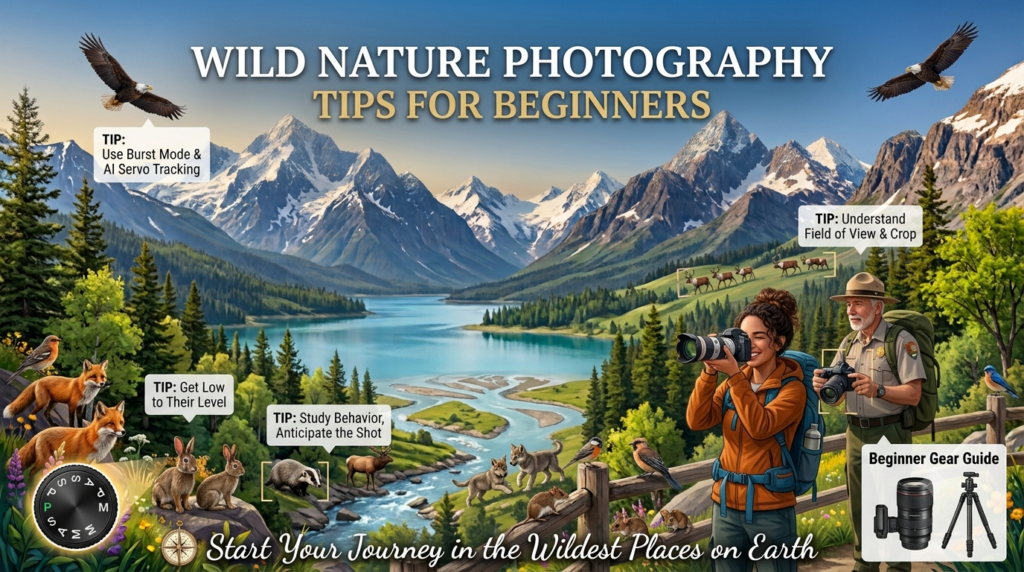
Understanding animal behavior can significantly improve your wildlife photography. Birds often return to the same branches, deer usually follow familiar trails, and many animals are most active during early morning or late afternoon. By learning these natural patterns, beginners can position themselves more effectively and anticipate interesting moments before they happen. Observing rather than interfering allows photographers to capture authentic wildlife behavior while supporting ethical nature photography.
Weather plays a much larger role in nature photography than many beginners realize. While sunny days are popular, cloudy skies often provide softer lighting that reduces harsh shadows and highlights. Light rain can make forests appear richer and more vibrant, while fog creates mysterious and atmospheric landscapes. Snow transforms familiar scenery into peaceful winter scenes, and storms often produce dramatic clouds and spectacular lighting conditions after they pass. Instead of avoiding changing weather, photographers should learn to embrace it as a creative opportunity.
Foreground interest is another technique that improves landscape photography. Including flowers, rocks, fallen leaves, streams, or tree branches in the foreground creates a stronger sense of depth and guides the viewer into the image. Rather than photographing only distant mountains or lakes, combining foreground, middle ground, and background elements creates more immersive and professional-looking compositions.
Using a tripod becomes especially valuable in low-light conditions. Early mornings, evenings, forests, and waterfalls often require slower shutter speeds that make handheld photography difficult. A tripod allows photographers to capture sharp images while experimenting with longer exposures. It is particularly useful for photographing flowing water, starry skies, sunrise landscapes, and forests where light levels are limited.
Focusing accurately is essential when photographing wildlife. Modern cameras often include continuous autofocus modes that track moving subjects, making it easier to capture birds, animals, or insects in motion. Beginners should also learn to focus on the eyes of animals whenever possible because sharp eyes create stronger emotional connections between the viewer and the subject. Even when the background is slightly blurred, sharp eyes make wildlife portraits appear much more engaging.
Color plays a major role in nature photography. Autumn forests filled with orange and red leaves, green rainforests after rainfall, colorful wildflowers during spring, and blue lakes reflecting mountain skies all create visually striking images. Paying attention to complementary colors and seasonal changes helps photographers capture scenes with greater visual impact. Sometimes waiting a few extra minutes for better light can completely transform the colors within a landscape.
Nature photographers should also experiment with different perspectives instead of always shooting from eye level. Kneeling to photograph flowers, lying close to the ground for insects, or climbing a safe viewpoint for wide landscapes creates more interesting compositions. Changing your perspective often reveals details and angles that are impossible to see from a standing position.
Editing photographs is an important part of modern photography, but beginners should use editing tools carefully. Simple adjustments such as improving brightness, contrast, sharpness, white balance, and color saturation can enhance an image without making it appear unnatural. Over-editing often removes the authentic beauty of nature. The goal should always be to present the scene as it was experienced rather than creating unrealistic effects.
Safety should never be overlooked while photographing nature. Always wear appropriate clothing for changing weather conditions, carry sufficient water and food during long hikes, inform someone about your travel plans, and remain aware of wildlife and terrain. Never approach dangerous animals for a closer photograph, and always follow park rules and local safety guidelines. A beautiful photograph is never worth risking your safety or disturbing wildlife.
Ethical photography is becoming increasingly important as more people explore natural environments. Responsible photographers avoid damaging plants, never feed wild animals, and respect protected habitats. Staying on marked trails, leaving no litter behind, and maintaining safe distances help preserve ecosystems for both wildlife and future visitors. Ethical photography ensures that nature remains healthy while allowing others to enjoy the same beautiful locations.
Practice is the key to improving photography skills. Every outdoor trip provides new opportunities to experiment with lighting, composition, camera settings, and creative techniques. Beginners should review their photographs after each session to understand what worked well and identify areas for improvement. Learning from mistakes is a natural part of becoming a better photographer.
Joining photography communities can also accelerate learning. Online forums, local photography clubs, social media groups, and workshops provide inspiration, constructive feedback, and valuable advice from experienced photographers. Studying the work of professional wildlife and landscape photographers helps beginners understand composition, storytelling, and creative vision while developing their own unique photographic style.
Nature photography is more than simply taking pictures—it is about telling the story of the natural world. Every photograph has the potential to inspire people to appreciate wildlife, protect natural habitats, and care more deeply about the environment. Images of forests, rivers, mountains, animals, and national parks remind us of the incredible beauty that exists beyond our cities and daily routines.
In conclusion, wild nature photography is an enjoyable and rewarding journey that combines creativity, patience, and a love for the outdoors. Beginners do not need expensive equipment to capture impressive images; understanding light, composition, camera settings, and ethical wildlife practices is far more important. With regular practice, careful observation, and respect for nature, anyone can create stunning photographs that celebrate the beauty of Earth’s wild landscapes. Every photo taken responsibly helps preserve unforgettable moments while encouraging others to appreciate and protect the remarkable natural world that surrounds us.