
Introduction:
A wildlife safari is one of the most exciting ways to experience nature in its purest form. Unlike visiting a zoo or wildlife sanctuary, a safari allows travelers to observe animals living freely in their natural habitats, behaving exactly as nature intended. Watching a pride of lions resting beneath an acacia tree, witnessing elephants crossing a river, or seeing thousands of wildebeest migrating across endless plains creates unforgettable memories that cannot be matched anywhere else. Wildlife safaris also offer opportunities to explore breathtaking landscapes, learn about biodiversity, and support conservation efforts that protect endangered species. Whether you dream of exploring the African savannah, tropical rainforests, wetlands, or remote wilderness areas, the world’s top safari destinations offer extraordinary experiences for nature lovers, photographers, and adventure seekers alike.
Safari tourism has grown significantly over the past few decades because more people want meaningful travel experiences that connect them with nature. Many safari destinations are located inside national parks and protected wildlife reserves where conservation is the highest priority. Visitors not only enjoy spectacular wildlife encounters but also contribute to local economies and conservation programs through park entrance fees, guided tours, and eco-friendly accommodations. Responsible safari tourism has become an important tool for protecting biodiversity while creating sustainable livelihoods for nearby communities.
One of the most famous wildlife safari destinations in the world is the Serengeti National Park in Tanzania. Covering nearly 15,000 square kilometers, the Serengeti is internationally recognized for its incredible biodiversity and the spectacular Great Migration. Every year, more than two million wildebeest, zebras, and gazelles travel across the vast grasslands in search of fresh grazing land. Following these enormous herds are predators such as lions, cheetahs, leopards, hyenas, and crocodiles, creating one of the greatest wildlife spectacles on Earth. Visitors can also observe elephants, giraffes, buffalo, hippos, and hundreds of bird species while enjoying breathtaking African sunsets across the endless plains.
Neighboring Kenya offers another world-renowned safari destination in Maasai Mara National Reserve. Connected directly to Tanzania’s Serengeti ecosystem, the Maasai Mara hosts part of the Great Migration and is famous for exceptional wildlife viewing throughout the year. Lions, elephants, rhinos, buffalo, leopards, cheetahs, and numerous antelope species roam freely across the open savannah. Hot air balloon safaris provide a unique perspective of the landscape, allowing visitors to watch wildlife from above while enjoying one of Africa’s most iconic natural environments.
Kruger National Park in South Africa is considered one of the finest safari destinations anywhere in the world. Covering almost 20,000 square kilometers, Kruger supports an extraordinary variety of wildlife, including the famous Big Five—lion, leopard, elephant, rhinoceros, and Cape buffalo. The park also contains giraffes, zebras, wild dogs, cheetahs, hippos, crocodiles, hyenas, and more than five hundred bird species. Excellent road networks, experienced guides, and diverse accommodation options make Kruger an ideal safari destination for both first-time visitors and experienced wildlife enthusiasts.
Chobe National Park in Botswana is especially famous for its enormous elephant population. Thousands of elephants gather along the Chobe River, particularly during the dry season when water becomes scarce elsewhere. Boat safaris offer close-up views of elephants swimming across the river alongside hippos, crocodiles, buffalo, antelope, and countless bird species. The combination of river-based wildlife viewing and traditional game drives makes Chobe one of Africa’s most unique safari experiences.
Botswana’s Okavango Delta is another extraordinary destination where wildlife thrives within one of the world’s largest inland deltas. Seasonal floodwaters transform the region into a vast network of channels, lagoons, and islands that support elephants, lions, leopards, wild dogs, giraffes, hippos, crocodiles, and hundreds of bird species. Traditional mokoro canoe safaris allow visitors to quietly glide through the waterways, providing peaceful and intimate wildlife encounters unlike those found in most other safari destinations.
Etosha National Park in Namibia offers a completely different safari experience. The park is centered around the enormous Etosha Salt Pan, a striking white landscape visible from space. During the dry season, animals gather around natural waterholes, making wildlife viewing exceptionally rewarding. Visitors can observe elephants, black rhinos, lions, cheetahs, giraffes, zebras, springboks, and numerous bird species within Namibia’s dramatic desert landscapes. Etosha’s unique scenery creates outstanding opportunities for wildlife photography.
India is also home to remarkable safari destinations, particularly Ranthambore National Park. Located in Rajasthan, Ranthambore is one of the best places in the world to observe the majestic Bengal tiger in its natural habitat. Ancient ruins, lakes, forests, and rocky hills create a beautiful backdrop for wildlife viewing. Besides tigers, visitors may encounter leopards, sloth bears, crocodiles, deer, wild boars, langur monkeys, and hundreds of bird species. Ranthambore demonstrates that unforgettable safari experiences extend well beyond the African continent.
Another exceptional Indian destination is Kaziranga National Park in Assam. Recognized as a UNESCO World Heritage Site, Kaziranga protects the largest population of endangered one-horned rhinoceroses. The park also supports elephants, Bengal tigers, wild water buffalo, swamp deer, river dolphins, and an incredible diversity of birdlife. Elephant safaris and jeep safaris allow visitors to explore the park’s wetlands and grasslands while observing rare wildlife in one of Asia’s most important conservation areas.
South America offers outstanding wildlife adventures as well, particularly within Brazil’s Pantanal. Unlike dense rainforests, the Pantanal’s open wetlands make wildlife easier to observe. Jaguars, giant otters, capybaras, caimans, anteaters, tapirs, monkeys, and colorful macaws thrive in this remarkable ecosystem. Many wildlife photographers consider the Pantanal one of the best places on Earth to photograph wild jaguars because sightings are relatively frequent compared to other regions.
The Galápagos Islands of Ecuador provide a safari experience unlike anywhere else in the world. Instead of traditional game drives, visitors explore volcanic islands where wildlife has evolved with little fear of humans. Giant tortoises, marine iguanas, blue-footed boobies, sea lions, penguins, and numerous endemic species can be observed at close range. Guided nature tours emphasize conservation and scientific education, making the Galápagos one of the world’s most unique wildlife destinations.
Uganda and Rwanda are internationally renowned for mountain gorilla trekking. Deep within the mist-covered forests of the Virunga Mountains and Bwindi Impenetrable Forest, visitors can observe endangered mountain gorillas living in family groups. These carefully regulated experiences provide unforgettable encounters while generating funding for conservation and local communities. Gorilla trekking is considered one of the world’s most extraordinary wildlife adventures because of the emotional connection many people feel when observing these intelligent primates in their natural environment.
Safari experiences are not only about seeing large mammals. Many destinations support extraordinary birdlife, reptiles, amphibians, butterflies, and countless smaller species that contribute to ecosystem health. Birdwatchers often travel specifically to safari parks where hundreds of colorful bird species can be observed during a single visit. Every ecosystem offers unique biodiversity that extends far beyond the famous Big Five animals.
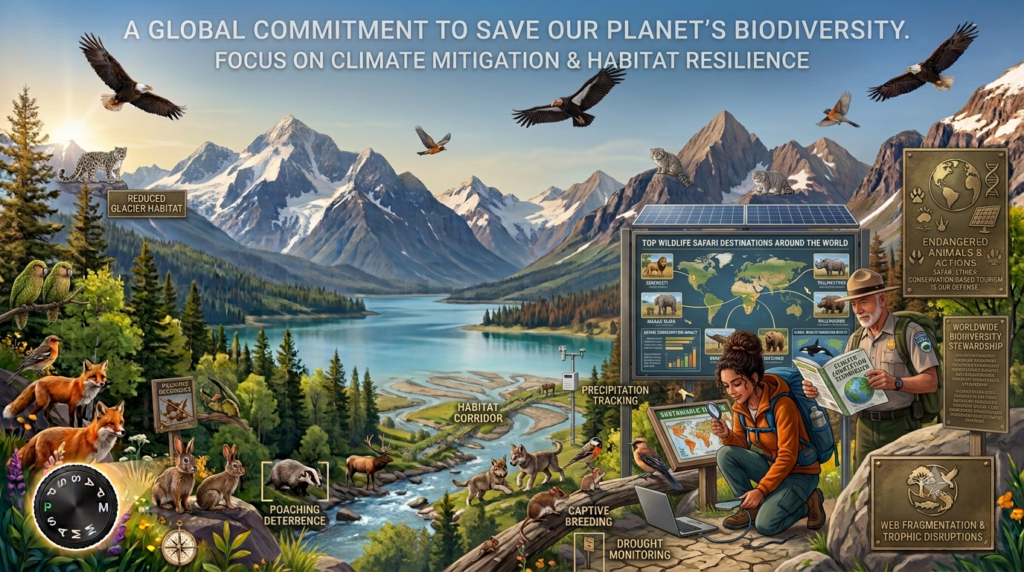
Wildlife safaris also play an essential role in conservation. Protected national parks and reserves provide safe habitats where endangered animals can live without excessive human disturbance. Revenue generated through tourism supports anti-poaching patrols, habitat restoration, wildlife research, veterinary care, and environmental education. Many local communities benefit economically from safari tourism, creating incentives to preserve wildlife rather than exploit natural resources. Responsible tourism has become one of the most effective tools for protecting biodiversity worldwide.
Planning a successful safari requires choosing the right season. Dry seasons often provide the best wildlife viewing because animals gather around rivers, lakes, and waterholes where they are easier to observe. Early morning and late afternoon game drives usually produce the highest number of wildlife sightings because many animals remain inactive during the hottest part of the day. Experienced guides significantly improve safari experiences by interpreting animal behavior and locating wildlife that visitors might otherwise overlook.
Responsible safari etiquette is equally important. Visitors should maintain safe distances from animals, avoid making loud noises, never feed wildlife, remain inside vehicles when required, and follow all instructions provided by park guides. Respecting wildlife ensures that animals behave naturally while protecting both visitors and fragile ecosystems.
Photography enthusiasts often consider wildlife safaris the ultimate outdoor photography experience. A telephoto lens, extra batteries, memory cards, and patience are essential for capturing memorable wildlife images. Soft lighting during sunrise and sunset creates ideal conditions for photographing animals against beautiful natural landscapes. However, ethical wildlife photography always prioritizes animal welfare over obtaining dramatic photographs.
Climate change, habitat destruction, illegal hunting, and pollution continue to threaten many safari destinations worldwide. Conservation organizations work tirelessly to protect wildlife through habitat restoration, anti-poaching initiatives, scientific research, and community engagement. Visitors who choose responsible safari operators directly contribute to these conservation efforts while supporting sustainable tourism.
In conclusion, the top wildlife safari destinations around the world offer far more than exciting vacations—they provide opportunities to witness the incredible beauty and diversity of Earth’s wild ecosystems. From the endless plains of the Serengeti and Maasai Mara to the wetlands of the Pantanal and the forests of India and Uganda, each destination offers unique wildlife encounters that inspire respect for nature. By choosing responsible safari tourism and supporting conservation initiatives, travelers help protect endangered species and preserve these remarkable ecosystems for future generations. A wildlife safari is not simply an adventure; it is a journey into the heart of the natural world, where unforgettable experiences create lasting appreciation for the beauty and importance of wildlife conservation.