
Introduction:
Climate change has become one of the greatest environmental challenges of the 21st century, affecting every corner of the planet and every form of life. From melting glaciers and rising sea levels to prolonged droughts and powerful storms, the changing climate is transforming the natural world at an unprecedented pace. Wild nature, which includes forests, mountains, rivers, oceans, wetlands, grasslands, deserts, and the countless species that depend on these ecosystems, is experiencing significant changes. Many plants and animals are struggling to adapt to shifting temperatures, changing weather patterns, and shrinking habitats. Understanding how climate change is affecting wild nature is essential because healthy ecosystems support biodiversity, regulate the Earth’s climate, provide clean air and water, and ensure the survival of future generations.
Climate change occurs primarily because of the increasing concentration of greenhouse gases in the atmosphere. Human activities such as burning fossil fuels, deforestation, industrial production, and large-scale agriculture release carbon dioxide, methane, and other greenhouse gases into the air. These gases trap heat within the Earth’s atmosphere, causing global temperatures to rise. Although natural climate variations have occurred throughout history, today’s warming is happening much faster due to human influence, making it difficult for ecosystems and wildlife to adapt quickly enough.
One of the most visible effects of climate change is the increase in global temperatures. Even small changes in average temperature can significantly affect ecosystems. Many plants bloom earlier than usual, animals alter their migration schedules, and breeding seasons become disrupted. Species that have evolved under stable environmental conditions often struggle to survive when temperatures change rapidly. Some animals move toward cooler regions or higher elevations, while others face population declines because suitable habitats no longer exist.
Forests are among the ecosystems most affected by climate change. Rising temperatures, prolonged droughts, and changing rainfall patterns weaken trees, making forests more vulnerable to disease, insect infestations, and wildfires. In many regions, severe wildfires have become more frequent and destructive, destroying millions of acres of natural habitat every year. Forests are essential because they absorb carbon dioxide, produce oxygen, regulate water cycles, and support millions of species. When forests are damaged, their ability to combat climate change is reduced, creating a harmful cycle that accelerates global warming.
The Amazon Rainforest, often referred to as the “lungs of the Earth,” illustrates the serious consequences of climate change. Rising temperatures and reduced rainfall increase the risk of drought and forest fires, threatening one of the world’s richest biodiversity hotspots. Many species found nowhere else on Earth depend on the Amazon’s stable climate. Continued environmental stress could permanently alter large portions of this extraordinary ecosystem, affecting wildlife, local communities, and global climate systems.
Polar regions are warming faster than many other parts of the world. Arctic sea ice continues to shrink as temperatures rise, reducing critical habitat for polar bears, seals, walruses, and other cold-adapted species. Polar bears rely on sea ice to hunt seals, their primary food source. As the ice melts earlier each year and forms later during winter, bears must travel greater distances, expend more energy, and often struggle to find enough food. Similar challenges affect many Arctic species whose survival depends on frozen environments.
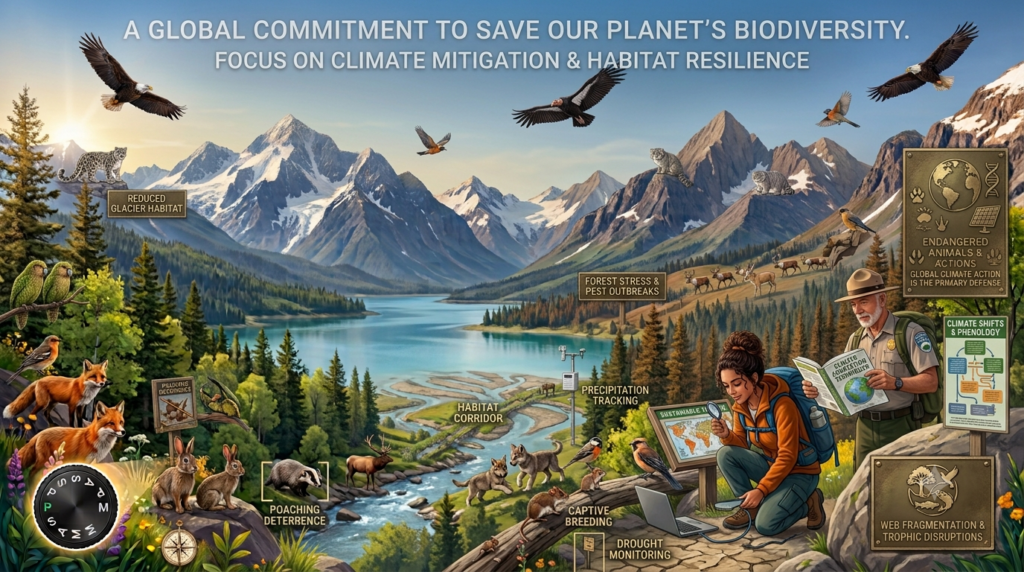
Mountain ecosystems are also experiencing dramatic changes. Glaciers around the world are melting at unprecedented rates, reducing freshwater supplies that millions of people and countless ecosystems depend upon. Snow-covered mountain regions support unique plant and animal species specially adapted to cold conditions. As temperatures rise, these species are forced to move to higher elevations where suitable habitat becomes increasingly limited. Eventually, some species may have nowhere left to survive.
Oceans absorb much of the excess heat generated by climate change, leading to warmer water temperatures that affect marine ecosystems worldwide. Coral reefs are particularly vulnerable. When ocean temperatures become too high, corals expel the tiny algae that provide them with food and vibrant colors, resulting in coral bleaching. If high temperatures persist, coral reefs may die, threatening thousands of fish, sea turtles, sharks, and other marine species that depend on healthy reefs for food and shelter.
Climate change also contributes to rising sea levels as glaciers and polar ice sheets melt. Coastal ecosystems such as mangrove forests, salt marshes, and nesting beaches face increasing risks from flooding and erosion. Sea turtles, for example, rely on sandy beaches for nesting, but rising seas reduce available nesting habitat. Coastal bird populations and marine ecosystems are similarly affected as shorelines continue to change.
Changing weather patterns are disrupting wildlife behavior across many ecosystems. Birds migrate based on seasonal temperatures and food availability, but shifting climate conditions can cause them to arrive too early or too late for breeding seasons. Plants may flower before pollinators such as bees and butterflies become active, reducing successful pollination. These timing mismatches can affect entire food chains and reduce ecosystem stability.
Freshwater ecosystems are equally vulnerable. Rivers, lakes, and wetlands experience changing water levels due to altered rainfall patterns, prolonged droughts, and melting snowpacks. Fish, amphibians, aquatic insects, and waterbirds depend on stable freshwater habitats for survival. Reduced water availability can increase competition for resources while making ecosystems more susceptible to pollution and invasive species.
Grasslands and savannas are also experiencing significant impacts from climate change. Extended droughts reduce vegetation growth, affecting grazing animals such as antelope, zebras, elephants, and bison. Predators including lions, wolves, and cheetahs are indirectly affected as prey populations decline. Changes in rainfall patterns also increase the risk of desertification, where fertile grasslands gradually transform into dry, unproductive landscapes.
Biodiversity is one of the greatest casualties of climate change. Healthy ecosystems depend on a wide variety of species performing different ecological roles. As habitats change, some species adapt successfully while others decline or disappear. Scientists estimate that climate change may increase the risk of extinction for thousands of plant and animal species if global temperatures continue rising. Every lost species weakens ecosystem resilience and reduces biodiversity that benefits both wildlife and humanity.
Climate change also creates favorable conditions for invasive species and wildlife diseases. Warmer temperatures allow insects, parasites, and pathogens to expand into regions where they previously could not survive. Forest pests such as bark beetles have devastated millions of trees in some regions due to warmer winters that fail to control insect populations naturally. Wildlife diseases can spread more rapidly when ecosystems become stressed by changing environmental conditions.
Despite these challenges, nature possesses remarkable resilience when given the opportunity to recover. Conservation efforts focused on protecting habitats, restoring forests, preserving wetlands, and expanding protected areas help ecosystems adapt more effectively to changing climates. Healthy ecosystems are generally more resilient than degraded ones, making habitat conservation one of the most effective climate adaptation strategies.
Renewable energy also plays a critical role in reducing climate change. Transitioning from fossil fuels to solar, wind, hydroelectric, and other clean energy sources reduces greenhouse gas emissions while protecting natural ecosystems from pollution. Sustainable agriculture, responsible forestry, and environmentally friendly transportation further contribute to climate mitigation efforts.
Governments, businesses, scientists, conservation organizations, and local communities all share responsibility for addressing climate change. International agreements encourage countries to reduce emissions, protect forests, restore ecosystems, and invest in climate resilience. Scientific research continues to improve our understanding of environmental changes while guiding effective conservation strategies.
Every individual can contribute to protecting wild nature from climate change. Reducing energy consumption, recycling, planting trees, using public transportation, supporting renewable energy, reducing food waste, conserving water, and choosing sustainable products all help reduce environmental impact. Supporting conservation organizations and educating others about climate change further strengthens global efforts to protect biodiversity.
Education remains one of the most powerful tools in addressing climate change. Schools, universities, museums, environmental organizations, and media all play important roles in increasing awareness about environmental challenges and encouraging sustainable lifestyles. Future generations equipped with environmental knowledge will be better prepared to develop innovative solutions that protect both people and nature.
Technology is also transforming climate conservation. Satellite monitoring tracks deforestation, drones monitor wildlife habitats, artificial intelligence analyzes climate data, and advanced scientific models predict environmental changes more accurately than ever before. These innovations help governments and conservationists make informed decisions that protect ecosystems and biodiversity.
The future of wild nature depends on actions taken today. Every forest preserved, every wetland restored, every endangered species protected, and every reduction in greenhouse gas emissions contributes to a healthier planet. Although climate change presents enormous challenges, collective action can still protect many of the world’s most valuable ecosystems and prevent further environmental damage.
In conclusion, climate change is affecting wild nature in countless ways, from melting glaciers and rising sea levels to habitat loss, declining biodiversity, and changing wildlife behavior. These environmental changes threaten not only animals and plants but also the natural systems that provide clean air, fresh water, food, and climate stability for humanity. Protecting forests, reducing greenhouse gas emissions, conserving biodiversity, restoring ecosystems, and embracing sustainable practices are essential steps toward preserving the natural world. By working together at local, national, and global levels, we can help ensure that future generations inherit a planet where wild nature continues to thrive, inspiring people with its beauty, diversity, and life-sustaining power.