
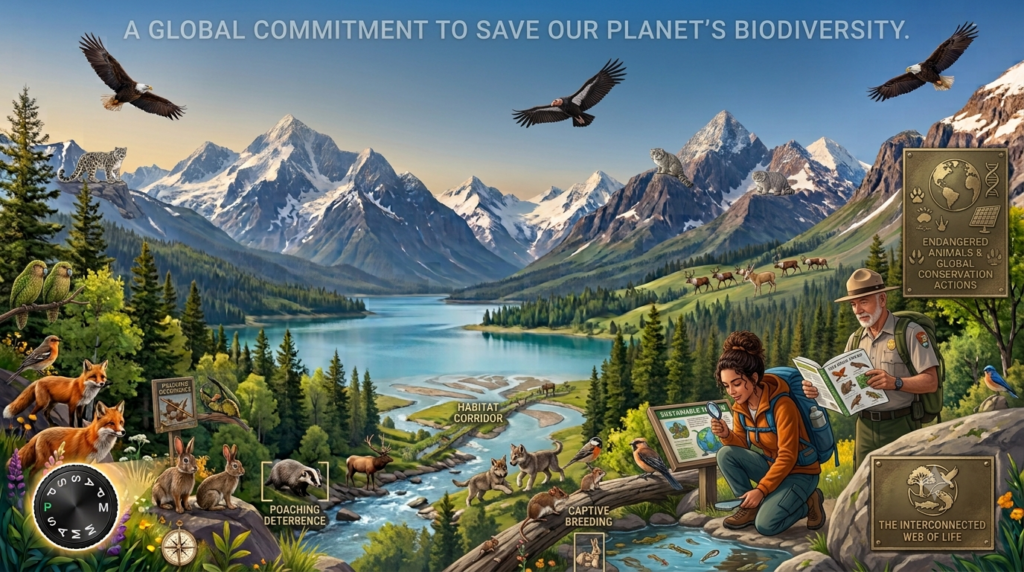
Introduction:
The Earth’s incredible diversity of wildlife is one of its greatest treasures, but many animal species are now facing the threat of extinction. From majestic tigers roaming dense forests to gentle sea turtles swimming across the oceans, countless animals are struggling to survive because of habitat destruction, climate change, pollution, illegal hunting, and other human activities. Every species plays a unique role in maintaining the balance of nature, and losing even one can have lasting effects on entire ecosystems. Protecting endangered animals is not only about saving wildlife—it is about preserving biodiversity, maintaining healthy ecosystems, and ensuring that future generations inherit a planet rich in natural beauty and life.
An endangered animal is a species whose population has declined so significantly that it faces a high risk of becoming extinct in the near future. Some species have only a few hundred individuals remaining in the wild, while others have experienced dramatic population declines over the past few decades. Conservation organizations, scientists, governments, and local communities work tirelessly to protect these vulnerable species, but continued public awareness and action are essential to prevent further losses.
One of the primary reasons animals become endangered is habitat destruction. Forests are cleared for agriculture, cities expand into natural areas, wetlands are drained, and grasslands are converted into farmland. As habitats disappear, animals lose access to food, water, shelter, and breeding grounds. Species that once thrived in large natural landscapes become isolated in small areas, making survival increasingly difficult. Protecting natural habitats is one of the most effective ways to ensure endangered species can recover and thrive.
Climate change has become another major threat to wildlife around the world. Rising global temperatures are altering ecosystems, melting glaciers, raising sea levels, changing rainfall patterns, and increasing the frequency of extreme weather events. Polar bears, for example, depend on Arctic sea ice to hunt seals, but shrinking ice reduces their ability to find food. Coral reefs suffer from rising ocean temperatures, threatening thousands of marine species that depend on healthy reefs for survival. Many birds and mammals are also forced to shift their migration patterns as environmental conditions change.
Illegal hunting and wildlife trafficking continue to endanger many species despite international conservation efforts. Animals are hunted for their fur, ivory, horns, skins, meat, or to supply the illegal exotic pet trade. Elephants are targeted for their ivory tusks, rhinoceroses for their horns, pangolins for their scales, and numerous bird species for illegal trade. These activities not only reduce wildlife populations but also disrupt ecosystems that rely on these animals to maintain ecological balance.
Pollution is another serious challenge facing endangered animals. Plastic waste entering oceans harms sea turtles, whales, dolphins, seabirds, and fish through ingestion or entanglement. Chemicals released into rivers contaminate freshwater ecosystems, while air pollution affects forests and wildlife habitats. Oil spills can devastate marine ecosystems, killing thousands of birds, fish, and marine mammals in a single event. Reducing pollution is essential for protecting wildlife and maintaining healthy ecosystems.
Among the world’s most iconic endangered animals is the tiger. Once widespread across Asia, wild tiger populations have declined dramatically due to habitat loss, poaching, and human-wildlife conflict. Conservation programs have helped stabilize populations in some regions through anti-poaching patrols, protected reserves, and habitat restoration. However, continued efforts remain necessary to ensure these magnificent predators survive for future generations.
The giant panda is another well-known conservation success story. Native to China’s bamboo forests, giant pandas once faced severe population declines due to habitat fragmentation. Through dedicated conservation efforts, including habitat protection, breeding programs, and forest restoration, panda populations have gradually increased. Although challenges remain, the giant panda demonstrates how coordinated conservation strategies can successfully protect endangered wildlife.
African elephants are among the largest land animals on Earth and play a vital role in maintaining healthy ecosystems. Their feeding habits help shape forests and grasslands, while their movements create pathways used by other wildlife. Unfortunately, elephants continue to face threats from habitat loss and illegal ivory hunting. Stronger law enforcement, community conservation programs, and international cooperation are helping protect these remarkable animals from extinction.
Rhinoceroses are also critically threatened due to illegal poaching driven by demand for their horns. Despite strict legal protections, rhino populations remain vulnerable in many parts of Africa and Asia. Conservation organizations use advanced technologies such as drones, GPS tracking, and surveillance systems to monitor rhinos and prevent poaching. Community involvement and public education have also become important components of rhino conservation efforts.
Sea turtles have existed for more than one hundred million years, surviving the extinction of dinosaurs, yet they now face numerous modern threats. Plastic pollution, fishing nets, coastal development, and climate change all affect sea turtle populations. Conservation initiatives include protecting nesting beaches, reducing plastic waste, modifying fishing equipment to reduce accidental captures, and educating coastal communities about wildlife protection.
Mountain gorillas are among the world’s rarest great apes, living in the forests of Central Africa. Habitat destruction, disease, and human conflict once pushed these animals toward extinction. Through carefully managed ecotourism, veterinary care, anti-poaching patrols, and habitat protection, mountain gorilla populations have slowly increased. Their recovery highlights the importance of long-term conservation planning and international collaboration.
Marine species also require urgent protection. Whales, dolphins, sharks, and many fish populations are affected by overfishing, pollution, shipping traffic, and climate change. Healthy oceans support biodiversity, regulate global climate, and provide food for billions of people. Marine protected areas, sustainable fishing practices, and pollution reduction help preserve ocean ecosystems while supporting coastal communities.
Every endangered species contributes to biodiversity and ecosystem stability. Predators regulate prey populations, herbivores shape vegetation, pollinators support plant reproduction, and scavengers recycle nutrients. Removing one species often creates ripple effects throughout the ecosystem, affecting many other plants and animals. Conserving endangered wildlife therefore benefits entire ecosystems rather than individual species alone.
National parks, wildlife reserves, and protected areas provide safe habitats where endangered animals can live with reduced human disturbance. These protected landscapes allow wildlife to breed, migrate, and find food naturally while supporting scientific research and environmental education. Many successful conservation programs depend on expanding and effectively managing protected habitats.
Technology has become an increasingly valuable tool in wildlife conservation. Scientists use satellite imagery to monitor forests, drones to detect illegal activities, camera traps to study rare species, and GPS collars to track animal movements. Artificial intelligence helps analyze environmental data, identify poaching risks, and improve conservation planning. These innovations allow conservationists to respond more quickly to emerging threats.
Education plays a crucial role in protecting endangered animals. When people understand the importance of biodiversity and the threats facing wildlife, they are more likely to support conservation efforts. Schools, zoos, wildlife documentaries, museums, and environmental organizations all help raise awareness about endangered species and inspire future generations to become environmental stewards.
Sustainable tourism also contributes to wildlife conservation. Responsible ecotourism generates income for local communities while creating incentives to protect wildlife rather than exploit natural resources. Visitors who respect park regulations, avoid disturbing animals, and support eco-friendly businesses help ensure that tourism benefits both conservation and local economies.
Every individual can make a meaningful contribution to protecting endangered animals. Reducing plastic use, recycling, conserving water, planting native trees, supporting wildlife conservation organizations, purchasing sustainable products, and avoiding products made from endangered species all help reduce pressure on natural ecosystems. Reporting illegal wildlife trade and educating others about conservation further strengthens global efforts to protect biodiversity.
Governments and international organizations also have an important responsibility. Strong environmental laws, anti-poaching enforcement, habitat restoration, climate action, pollution control, and international agreements such as the Convention on International Trade in Endangered Species (CITES) provide essential legal frameworks for wildlife protection. Continued investment in conservation science and community-based programs is critical for long-term success.
The future of endangered animals depends on the choices humanity makes today. As populations grow and demand for natural resources increases, balancing economic development with environmental protection becomes increasingly important. Conservation is not about preventing progress but about ensuring that development occurs sustainably while preserving the ecosystems that support all life.
In conclusion, endangered animals are an essential part of Earth’s natural heritage and play irreplaceable roles in maintaining healthy ecosystems. Habitat destruction, climate change, pollution, illegal hunting, and human activities continue to threaten countless species worldwide, but there is still hope. Through conservation, education, sustainable practices, technological innovation, and global cooperation, we can protect endangered wildlife and restore damaged ecosystems. Every action—whether large or small—helps safeguard biodiversity and ensures that future generations can continue to experience the beauty, wonder, and ecological importance of the world’s extraordinary wildlife. Protecting endangered animals is not simply a responsibility; it is a commitment to preserving the rich diversity of life that makes our planet truly remarkable.